The Blue Lagoon — known locally as Krknjaši — has quietly become the most photographed swim spot on the central Dalmatian coast. It is a shallow, sandy-bottomed bay tucked between three uninhabited islets off the coast of Šolta, and the water there has a glow that is hard to describe to anyone who has only seen it on Instagram.

Where exactly is the Blue Lagoon?
The Blue Lagoon sits between the islets of Veli Krknjaš, Mali Krknjaš, and the rocky outcrop of Balkun, on the eastern side of Šolta Island. From central Split it is roughly 12 nautical miles southwest, or about 80–90 minutes on a traditional wooden boat at cruising speed. The lagoon is open to the southeast, which makes it sheltered from the dominant maestral wind from the northwest, and is the main reason the water stays so calm even on breezy days.
What to expect when you arrive
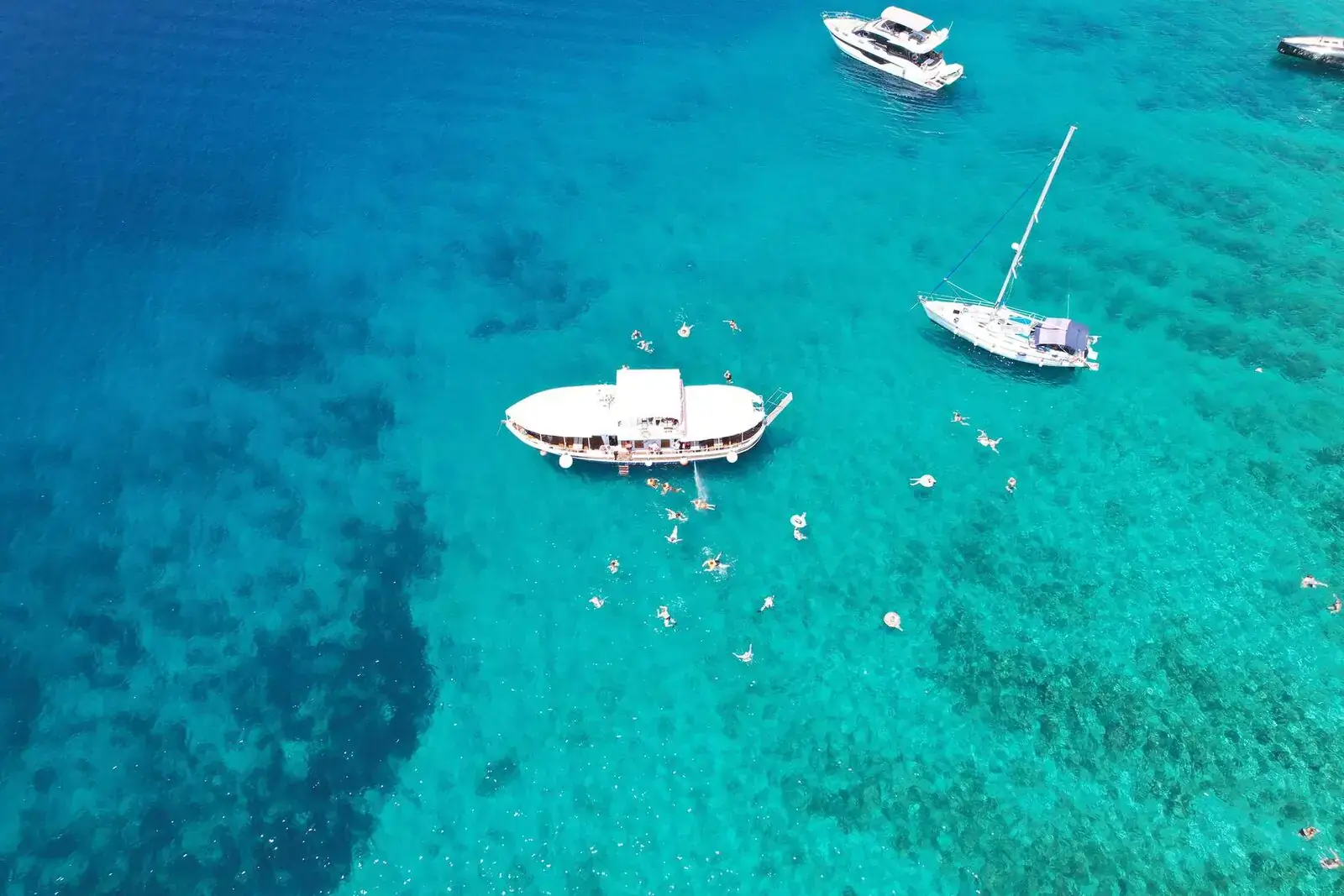
The bay is shallow — most of it knee to shoulder deep, with sandy patches scattered between sea-grass meadows. The seabed combined with the angle of the sun is what produces the turquoise colour. There is no infrastructure on the islands themselves: no kiosks, no toilets, no jet skis. Just rocky shoreline, a couple of pine trees, and other boats anchored at a distance.
Most tour operators stop in the Lagoon for about 60–90 minutes, long enough for a proper swim and snorkel. Snorkeling is best on the south-east side of Veli Krknjaš where the rocks drop into deeper water and you'll see schools of bream, the occasional octopus, and (if you're lucky) sea cucumbers and rays. We provide masks and fins on board.
How to get there from Split
The only practical way to reach the Blue Lagoon is by boat. There are three options:
- Group boat tour from Stobreč Harbor or Split Port — €55/person, includes lunch, runs daily from May to October. This is what we operate.
- Private charter — €1,200–3,500/day for up to 80 guests on a traditional wooden boat. Whole-boat exclusive.
- Speedboat shuttle — fastest (45 minutes), but you'll share the bay with twenty other speedboats and won't have time for a proper lunch. We've written a full speedboat-vs-traditional comparison.
When is the best time to go?
Sea temperature is most pleasant from mid-June through late September. July and August are the busiest months and the Lagoon can host 30+ boats at peak hours (11:00–14:00). If you want quieter water and fewer people, go in early June or late September, or aim for an early-morning departure that gets you there before 10:00. We have written a dedicated guide on the best time to visit if you want more detail.
What to bring
Less than you think. We provide towels, snorkeling gear, drinks, and a hot lunch. Bring sunscreen (reef-safe, please), a hat, sunglasses, and a swimsuit. Your phone if you want photos — but the Lagoon is small enough that you'll be back to the boat in 30 seconds if you forget anything.
How does the Blue Lagoon compare to other Croatian swims?
It's calmer and shallower than Stiniva Cove on Vis or Blue Cave on Biševo, both of which require a 3–4 hour boat journey one way. It's also far more accessible than Pakleni Islands, which can only be reached via Hvar. For travelers based in Split who want a full day on the water without a punishing schedule, the Blue Lagoon + Nečujam Bay combination is the sweet spot.
Ready to book?
Our full-day Blue Lagoon tour from Stobreč Harbor or Split Port runs 8–9 hours, departs daily from May to October, and costs €55 per adult. See the full itinerary, or read about which departure point suits you.